| SHADOWS ON THE WALL | REVIEWS | NEWS | FESTIVAL | AWARDS | Q&A | ABOUT | TALKBACK | |||||||||||||||||||||
 Shadows off the beaten path Shadows off the beaten pathIndies, foreign, docs and shorts...
On this page:
LA GIOIA |
THREE GOODBYES |
WILD FOXES
| |||||||||||||||||||||
| See also: SHADOWS FILM FESTIVAL | Last update 19.Apr.26 | |||||||||||||||||||||
|
La Gioia aka: Joy Review by Rich Cline | 
| |||||||||||||||||||||
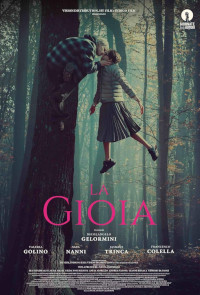 dir Nicolangelo Gelormini scr Benedetta Mori, Giuliano Scarpinato prd Valeria Golino, Viola Prestieri with Valeria Golino, Saul Nanni, Jasmine Trinca, Francesco Colella, Betti Pedrazzi, Giovanni Bissaca, Laura Mazzi, Gilda Postiglione, Anita Fiorello, Andrea Vasone, Giorgio De Paoli release It 12.Feb.26, UK Mar.26 cmi, US Apr.26 mff 25/Italy 1h49 VENICE FILM FEST  Is it streaming? |
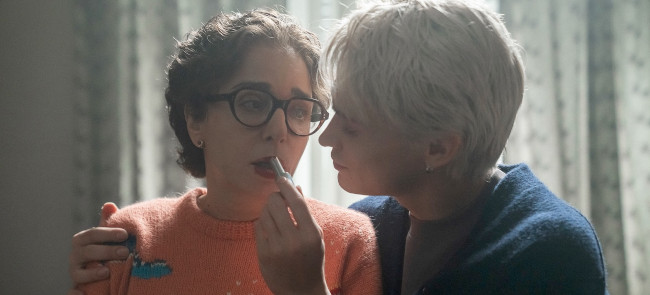 Brisk and involving, this Italian drama pulls us in with its characters' vivid internal lives, including yearnings for companionship that are easy to identify with. It's the story of a complex relationship, and director Nicolangelo Gelormini inventively depicts how this awakens the heart of a woman who had given up hope for herself. This is a dark, multi-layered story full of ideas that get deep under the skin. Lack of sleep is causing problems at school for bright 18-year-old Alessio (Nanni), who works nights as an escort for Cosimo (Colella) to help his supermarket cashier mother Carla (Trinca) make ends meet. Looking for help with his French studies, Alessio approaches lonely middle-aged teacher Gioia (Golino), who still lives with her parents (Pedrazzi and Bissaca). But the tutorial sessions between Alessio and Gioia quickly become personal, and their unexpected emotional connection begins to feel romantic. As Gioia begins to see possibilities she had long abandoned, Alessio quickly starts to make plans for their future. Based on a true story, the film is skilfully shot to capture closeness between characters, which allows it to get under the skin. Alessio is a young man of many talents, including art and dance, and he knows the impact he has on people, which is a lot of power for a teen to have. It seems clear to everyone that he is scamming Gioia, but there are also feelings churning inside of him. And after moving slowly through life, Gioia is intoxicated by the idea of doing something impulsive for a change. Golino gives the football-loving Gioia a remarkably open-handed emotionality as a closed-off woman who begins to blossom when she finds someone she cares for. The magnetic Nanni makes Alessio a natural charmer, effortlessly seducing everyone he meets. It's obvious that Gioia would fall for him, and also that she would know how pointless that is. It's painful to watch her fall so deeply, but Golino plays her naive hopefulness with lovely sensitivity. As the narrative unfolds, it gets increasingly tricky to factor everyone's private motivations into the equation. Is Alessio genuinely interested in Gioia? Because she truly cares for him. But there is always the very real possibility that he is only using her. So where the story goes feels both inevitable and unexpected. And when things turn melodramatic in the twisty and somewhat extended final act, the film keeps us guessing how it might end. Even though we already know.
| ||||||||||||||||||||
|
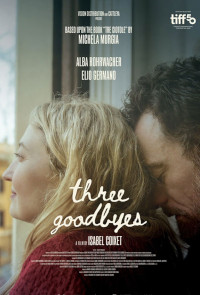
Three Goodbyes Tre Ciotole Review by Rich Cline | 
TORONTO FILM FEST Is it streaming?
| 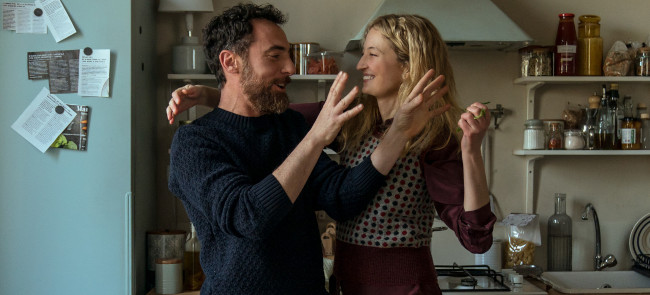 Diving straight into the life of a long-term couple, this Italian drama immediately finds resonance with its authentic dialog and transparent performances. This isn't always easy to watch, as it circles the disintegration of a relationship. But director-cowriter Isabel Coixet balances the pain by filling the screen with honest emotion, warm humour and genuine affection. So this becomes a lovely, involving film with something important to say. After what feels like a petty argument, Marta (Rohrwacher) and Antonio (Germano) begin to unpick their relationship. Fed up with Marta's dismissive attitude, Antonio suggests that they take a break. Marta is badly shaken, trying to pretend that everything is fine at the school where she's a teacher or at dinner with her messy sister Elisa (D'Amico). Meanwhile, Antonio gets on with his work as an acclaimed chef running a restaurant with his friend Claudio (Terenzi), who encourages him to date colleague Silvia (Bellugi). But when they go out, she only asks Antonio about Marta. Intriguingly, the script skims over this couple's back-story, revealing their seven-year past through current feelings. Flickers of home-movie memories reveal a lingering fondness for each other. Amusingly, Marta seeks company in a discarded cardboard standee of a K-pop star (Jung). But she also finds herself in an unexpected health journey for which she badly needs support. Even with her own drama, Elisa is there for her. And Marta also reaches out to friendly teacher Agostino (Carril). Everyone on-screen feels bracingly authentic. Rohrwacher conveys feelings with her full physicality, nicely understating how Marta tries to conceal how badly she's hurting. By contrast, Germano's Antonio plays the casual macho game in public while silently pining for Marta. These are strongly nuanced performances that never strike a false note. They're introspective and sympathetic, so we can't help but root for these two lovely people to simply speak to each other again. And when they do, it's revelatory. This is a remarkably astute portrait of how things we used to love can become minor annoyances, turning into larger barriers if we let them. Just as powerful is the way the film depicts how other people always have ignorant theories to explain your breakup and your feelings. "You do things in life that don't make sense," Antonio says as he begins processing his thoughts. And the way Marta awakens to the world brings a blast of hopefulness to a serious narrative, especially when she describes her life as a beautiful accident.
|
| Wild Foxes La Danse des Renards Review by Rich Cline |
| 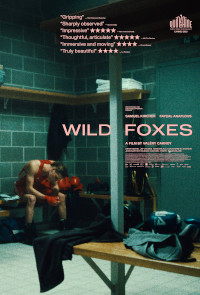 dir-scr Valery Carnoy prd Julie Esparbes with Samuel Kircher, Faycal Anaflous, Anna Heckel, Jef Jacobs, Hassane Alili, Salahdine El Gharchi, Jean-Baptiste Durand, Raphael Thiery, Stephanie Goemaere, Yoann Blanc, Samuel Carnoy, Frederic Clou release Fr 18.Mar.26, UK 1.May.26 25/France 1h32 CANNES FILM FEST Now streaming...
| 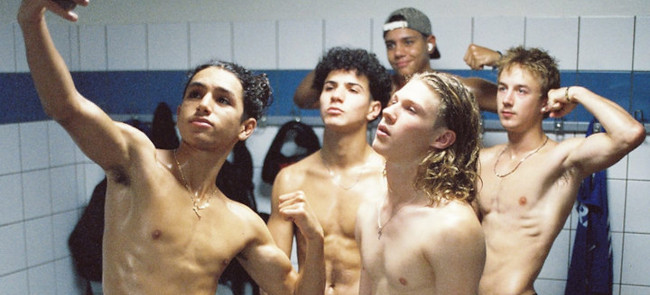 Infused with youthful energy, this French-Belgian drama is a fizzy exploration of masculinity through the eyes of teen boxers in a sporting academy. Writer-director Valery Carnoy keeps the focus personal, allowing the young actors to bring out the conflicting emotions these characters are struggling to control. So it gradually becomes a dark film that continually threatens to get even darker. Thankfully there is resonance in a pivotal friendship. In his class of boxing students, Camille (Kircher) is the star heading for the Euro Championships alongside his best pal Matteo (Anaflous). Then a horrific accident almost ends his career. As his body makes a recovery, he gets back to training. But Cam's mind is no longer focussed on the sport, and both Coach Bogden (Durand) and his fellow teammates (including Jacobs, Aili and El Gharchi) begin to get frustrated with his distracted attitude, fracturing their close camaraderie. Meanwhile, he befriends taekwondo student Yas (Heckel), who's able to see beyond his identity as a boxer. Even though he is naturally gifted, Cam loves boxing because it's something he can do with Matt; they learned to fight at age 8 to escape terrible family situations. So when their friendship begins to fracture, it devastates them. Yet while it's clear that Cam needs mental health care, the culture of machismo dismisses that, leaving him floundering. The film raises these issues skilfully, but only offers hope in some innate humanity. Performances are unnervingly raw, so we flinch at every punch. Kircher has terrific charisma as a wiry kid who doesn't understand why he's so good at boxing. He and Anaflous create remarkable chemistry that beautifully depicts Cam and Matt's loyalty, and also the pain when they fall out. Other boys are mainly braying followers in service to Jacobs' fiery lead bully, but they retain an admiration for their leader Cam, even as he loses his power. The title metaphor is on the nose, referring to pesky critters in the woods around the school. Indeed, the script doesn't bother with nuances. It launches ideas then throws characters into situations that push them in tough directions, honing in on how they're neither children nor grown-ups. Of course, coaches and teachers are distracted by their jobs, and parents are rather oblivious, so these boys are left to work this out on their own. And in a culture featuring this kind of toxic masculinity, we worry whether the ending is as hopeful as it seems to be.
| 
See also: SHADOWS FILM FESTIVAL © 2026 by Rich Cline, Shadows
on the Wall
HOME | REVIEWS | NEWS | FESTIVAL | AWARDS
| Q&A | ABOUT | TALKBACK | | ||||||||||||||