| SHADOWS ON THE WALL | REVIEWS | NEWS | FESTIVAL | AWARDS | Q&A | ABOUT | TALKBACK | |||||
 Shadows off the beaten path Shadows off the beaten pathIndies, foreign, docs and shorts...
On this page:
KEEP COMING BACK |
MASPALOMAS |
STRANGE RIVER
| |||||
| See also: SHADOWS FILM FESTIVAL | Last update 1.Apr.26 | |||||
|
Keep Coming Back Siempre Vuelven Review by Rich Cline | 
| |||||
 dir-scr Sergio De Leon prd Micaela Sole with Bruce Pintos, Juan Wauters, Anabella Bacigalupo, Abril Pereira, Gaston Chamorro, Alfonso Bueno Lima, Roberto Bornes, Rasjid Cesar, Matias Buriano, Santiago Turenne, Adriana Lagomarsino, Adriana Senandes release Uru 5.Jun.25, UK Mar.26 flare 25/Uruguay 1h31  Now streaming... |
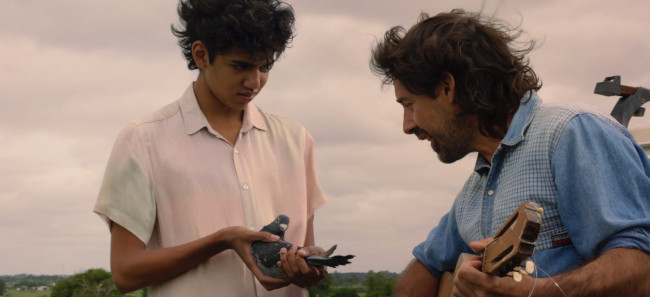 Memories, desires, fantasies and dreams swirl around inside a young man's mind, as this Uruguayan drama finds unusual resonance in its surreal flourishes. It's also a rare movie about homing pigeons, using them as a symbol for grief and inheritance, as well as unwanted truths about sexuality that won't go away no matter how hard you try. And writer-director Sergio De Leon skilfully deploys a very light touch. In a rural community, 18-year-old Emilio (Pintos) is struggling after the death of his mother Lucia (Bacigalupo), who raised pigeons with Juan (Wauters). He's also resisting his dawning understanding of his sexuality, lashing out at a gay friend (Lima) and striking macho poses with others. Eventually, this leaves him alone as he prepares for a major homing pigeon race that would fund the continued operation of the dovecote. But in his head, thoughts of his mother swirl with his own identity, and he'll need to work out who he is before he can move forward. Far from a typical coming-of-age story, this film veers in unexpected directions to knowingly reveal the storm in Emilio's head. Visiting gay environments like bathhouses and cruising sites, he's startled by his own desire. His retreat into homophobic nastiness is more conditioned than instinctual. Then after alienating everyone around him, he must begin the difficult work of rebuilding those bridges. And this is where the film finds a sense of emotional hope. Pintos has a magnetic presence, and his remarkable pigeon chest isn't a filmmaking gimmick. His eyes drill right through the screen, evoking enormous feelings that Emilio can't quite get a grip on. He's been taught that being a straight tough guy is the only way to prove himself worthy of continuing his mother's work. To figure this out, he needs the example of the talented Juan, beautifully performed with offhanded heart by musician Wauters. Surrounding actors also have a strong impact without stealing focus. Because De Leon maintains defiant originality in the way he depicts things, the story unfolds in ways that continually catch us by surprise. And even though it's at the centre of the plot, the pigeon metaphor comes through without ever feeling heavy-handed. This is a skilful look at how all of us have to grapple with who we genuinely are as opposed to who we think we should be. And it's a quietly insistent statement that denying the truth will only leave us alone and miserable.
| ||||
|
Maspalomas Review by Rich Cline |
MUST  SEE SEE
| |||||
 dir Aitor Arregi, Jose Mari Goenaga scr Jose Mari Goenaga prd Ander Barinaga-Rementeria, Xabier Berzosa, Fernando Larrondo, Ander Sagardoy with Jose Ramon Soroiz, Nagore Aranburu, Kandido Uranga, Kepa Errasti, Zorion Eguileor, Miren Gaztanaga, Cristina Yélamos, Paul Berrondo, Jose Ignacio Murua, Eugenio Etxebeste, Alberto Tosco, Martin Maio release Sp 26.Sep.25, UK Oct.25 lff, US Jan.26 psiff 25/Spain 1h55  Is it streaming? |
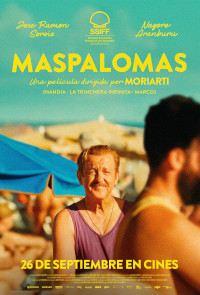
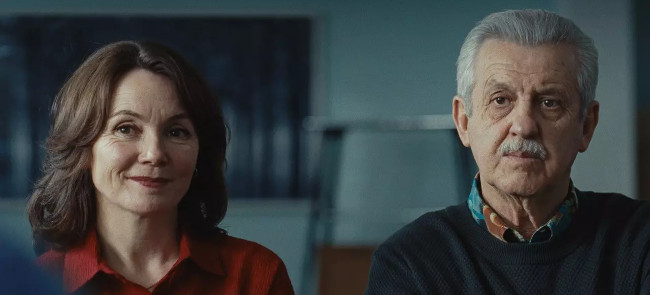 With a pointed premise that's rarely depicted on screen, this Basque drama continually catches our attention with honest drama and realistic emotions surrounding an older gay man. Filmmakers Aitor Arregi and Jose Mari Goenaga take a superbly offhanded approach to the narrative and characters. Shot in an almost documentary style, the film relies more on unspoken interaction than dialog, which encourages the audience to engage more deeply. In Maspalomas, Gran Canaria, 72-year-old Vicente (Soroiz) is finally embracing gay life at age 72, after a long marriage followed by a 25-year relationship with his ex-boyfriend. Now he's cruising in the dunes and dancing in nightclubs with his friend Ramon (Eguileor). Then a stroke forces him to return to mainland Spain, where his estranged daughter Nerea (Aranburu) places him in rehab care. With right-wing roommate Xanti (Uranga) and clearly gay carer Inaki (Errasti), Vicente lays low. But he begins to realise that if he doesn't start living his life honestly now, he never will. Documentary-style Canary Island scenes bookend the film with sunshine, nude beaches, drag bars, Pride marches and sex clubs. So real life in Spain feels almost painfully muted, especially as Vicente's lively little dog Argi must live with Nerea. But the real shock is that Vicente has to return to the closet, pretending to be straight with his roommate and carers. And with his daughter, he is also going to have to confront the way he left his family. These issues play out subtly in nuanced performances. Soroiz has a relaxed presence as Vicente, allowing the audience to see under his skin. He's remarkably sympathetic, a man who has made some bad decisions but works up the courage to face them while battling back from a debilitating illness. His distinct connections with others have a sometimes startling complexity, and the supporting cast members shine in unusually well-rounded roles, with stand-out moments for Aranburu and Uranga. This is a fascinating depiction of the impact a machismo-driven society has on people who struggle to fit the accepted mould. So the disappearance of gay safe spaces from cities is a real problem, even for a younger generation that claims not to need them anymore. The filmmakers also cut through surfaces to remind us that even the biggest bigot in the room is a human being with a beating heart. And Vicente's journey is gorgeously rendered, right to the moment when he is finally honest with himself and others for the first time.
| ||||
|
Strange River Estrany Riu Review by Rich Cline |
| |||||
 dir-scr Jaume Claret Muxart prd Sophie Ahrens, Fabian Altenried, Xavi Font, Kristof Gerega with Jan Monter, Nausicaa Bonnín, Jordi Oriol, Francesco Wenz, Bernat Sole, Roc Colell, Claire Vivianne Sobottke, Sergi Ferrer Pedrazo release Sp 3.Oct.25, US Oct.25 ciff, UK Mar.26 flare 25/Spain 1h45 VENICE FILM FEST Is it streaming? |
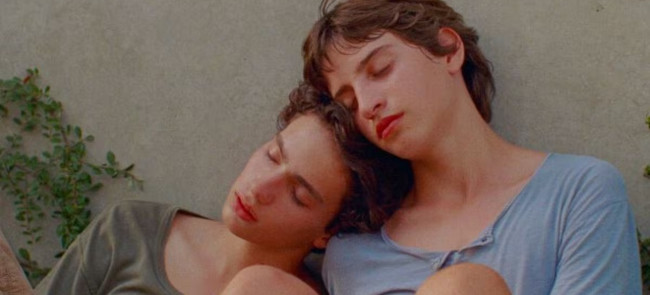 Following a Catalan family on a biking holiday along the Danube in Germany and Austria, this understated film zeroes in on a teen discovering the nature of his desire. But this isn't a coming-of-age story, or a coming-out film. Instead, writer-director Jaume Claret Muxart inventively digs under the surface to find truths that span generations. So it becomes a fascinating portrait of a family at a pivotal moment. At 16, Didac (Monter) of course thinks that his parents Monica (Bonnin) and Albert (Oriol) don't understand him. They are supportive about him being gay, but he explains that he isn't gay just because he has a crush on a boy. Younger brothers Biel (Sole) and Guiu (Colell) are clueless, but know that something is up with him as they cycle and camp along the river. Then when they visit their dad's old architecture college, Didac spots a guy (Wenz) his age, following him into an adventure that feels both exciting and rather nerve-wracking. Shot on grainy, colour-rich 16mm film, the imagery is gorgeous, leaning into some beautifully surreal flourishes along the way. Bright sunlight, inky darkness and watery fantasies swirl around this family as they pitch their tents in various offbeat locations, diving into the water occasionally and revisiting key themes from their life in various encounters with strangers. Dialog is fairly minimal, but the performances beautifully reveal thoughts and feelings. Much of the film's power is in silent moments, especially between Monter's curious, nervous Didac and Wenz's cheekier stranger. Both actors are terrific, avoiding the predictable route through their encounter. As the younger siblings, Sole and Colell have a strong presence, always seeming to be in the wrong place. And Bonnin and Oriol take their own meaningful journeys as parents navigating their eldest son's quietly resistant attitudes while trying to soothe the rough edges of their relationship. Monica and Albert understand something that their sons do not: this is likely to be the last time they will be able to take a summer holiday like this. So the film becomes a lovely depiction of this moment when everything begins to shift for this family, something that can be seen in each of their inter-relationships. This leads to several subtly moving moments along the way, from a piano-playing sequence and Monica's telling encounter with a German actress (Sobottke) to the film's final shot, in which the camera shifts from Didac to Biel.
| ||||

See also: SHADOWS FILM FESTIVAL © 2026 by Rich Cline, Shadows
on the Wall
HOME | REVIEWS | NEWS | FESTIVAL | AWARDS
| Q&A | ABOUT | TALKBACK | | ||||

