| SHADOWS ON THE WALL | REVIEWS | NEWS | FESTIVAL | AWARDS | Q&A | ABOUT | TALKBACK | |||||||||||||||||||||
 Shadows off the beaten path Shadows off the beaten pathIndies, foreigns, docs and shorts...
On this page:
BLACK BURNS FAST |
CAN'T GO OVER IT |
DRUNKEN NOODLES
| |||||||||||||||||||||
| See also: SHADOWS FILM FESTIVAL | Last update 1.Apr.26 | |||||||||||||||||||||
|
Black Burns Fast Review by Rich Cline | 
| |||||||||||||||||||||
 dir-scr Sandulela Asanda prd Cait Pansegrouw, Elias Ribeiro with Esihle Ndleleni, Muadi Ilung, Mila Smith, Khensani Khoza, Nstimedi Gwangwa, Basetsana Motloung release UK Mar.26 flare 26/South Africa 1h40 BERLIN FILM FEST  Is it streaming? |
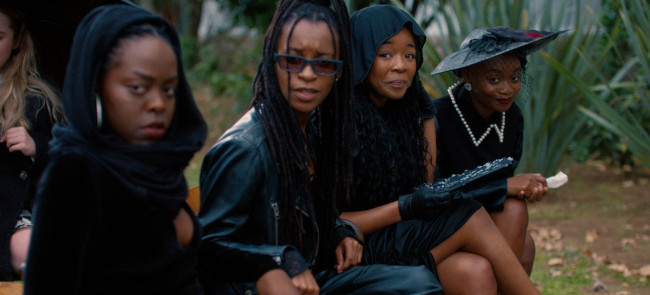 With sassy humour, colourful sets and costumes, and videogame-style graphic flourishes, this teen comedy from South Africa lands somewhere in the region of shows like Heartstopper, Sex Education and Never Have I Ever. It's enjoyable simply for what it is, and the writing is cute and often very funny. But it's never particularly pointed about the serious themes that are raised. So it ultimately feels somewhat simplistic. At a Cape Town religious girls school, bright student Luthando (Ndleleni) studies all the time, so only has one friend, Jodie (Smith). Then new girl Ayanda (Ilung) catches Lu's eye. With the super-cool Ayanda at her side, Lu joins the Galz, the popular clique led by mean girl Zenande (Khoza). But Lu's laser focus on Ayanda strains her friendship with Jodie. And as Ayanda introduces Lu to romance, Lu's grades begin to wobble. Soon, her reckless behaviour begins to get her into trouble with the principal. Which is a big problem for Lu's high-achieving mother. Fabulous set-pieces liven up the story, as the Galz go prowling around the campus by night, getting up to all kids of mischief. There are also several sexy moments, as well as a hamster funeral. And an impending school dance puts pressure on everyone to find hot dates and glamorous outfits. People-pleaser Lu finds herself caught between Ayanda and the boy she has agreed to go with to the dance. All of this blows up with exaggerated teen reactions. And it goes pretty much exactly where we expect. Performances are likeable, even if characters never feel particularly deep. Ndleleni has terrific screen presence as Lu, who is only beginning to admit to herself that she might be gay. Her friendships are vividly played, even if fall-outs and reconciliations feel scripted. Smith is strong as Jodie, especially in tricky scenes later on. And Ilung has fierce charisma as the confident Ayanda. Other characters have nice subplots, and the grown-ups are also solid, just about transcending their cartoonish types. There are constant pointed comments about race and gender that add deeper topicality to the story, plus a superb depiction of awkward adolescent sexuality. The boys school next door adds some spice to both the comedy and the drama, especially in multiple moments in which girls are punished for something a boy does. But all of this is played with a wink and a smile, plus a reminder that these youngsters still have a lot to figure out.
| ||||||||||||||||||||
|
Can’t Go Over It Review by Rich Cline | 
Is it streaming?
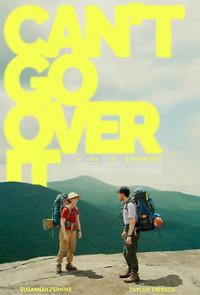
| 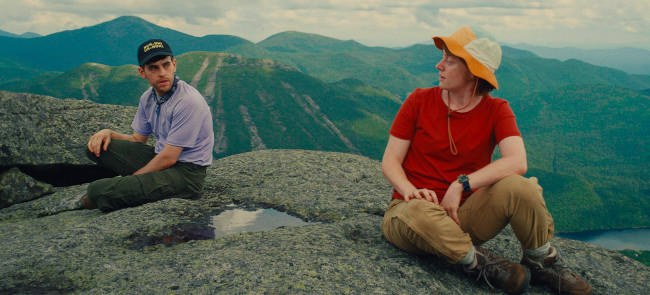 Astutely exploring an offbeat friendship, this comedy-drama follows two queer 30-somethings who worry their friendship might have run its course. Much of the film consists of them walking through a forest chatting about random topics. The actors and writer-director Ethan Fuirst cleverly bring out subtle shifts in their dynamic, gently touching on the way people grow and change at different rates, and what it takes to stick together. Best friends Miller (Perkins) and Caleb (Trensch) are already feeling the strain when they start their yearly summer hike. Like an old married couple, they know each other well and work through their issues, regaining their banter. Both are facing changes. Caleb is moving out of his Brooklyn apartment and would like to find a boyfriend. And ex-flatmate Miller is settling in with their boyfriend. Over the years, this duo has aimed to summit 46 peaks together, and there are only a few left this year. The hovering question is what they'll do next summer. In the clever opening sequence, Miller and Caleb set off, summit a peak, put up their tent and make dinner, all without saying a word. When they do speak, their hilarious conversation reveals years as friends, finishing each other's most absurd thoughts. Annual traditions include exchanging stickers for their water bottles. And the camera catches their various daily routines along with tiny niggles between them. Some of these are minor disagreements, but a deeper distance growing beneath the surface is powerfully emotional. Offhanded and naturalistic, Perkins and Trensch create vivid personalities that mix together intriguingly, teasing each other and remembering their younger selves. So it's fascinating to see them recognise the changes they have experienced since they first began hanging out a decade ago. The actors beautifully capture both the tight bond between them and the creeping doubts that are starting to emerge. So there's a remarkably complexity when they snap at each other. All of this is augmented by the pristine wilderness locations, with beautiful mountains, rivers and forests, all of which of course carry hidden dangers, especially after dark. Because this is a nonbinary bisexual and a gay man, their conversations often drift into discussions of how people have marginalised them. They also speak about relationships through the filter of their experiences, which have changed their perspectives since they were in their 20s. It's a knowing look at about how much work is required to maintain even a platonic friendship over an extended period.
|
| Drunken Noodles Review by Rich Cline |
MUST  SEE SEE
|  dir-scr Lucio Castro prd Joanne Lee, Julia Bloch, Lucio Castro, Barton Cortright with Laith Khalifeh, Joel Isaac, Ezriel Kornel, Matthew Risch, Celine Clermontois, John Arthur Peetz, Guillermo Garcia Arriaza, James Kerley, Mariano Lopez Sloane, Tony Cox, Natacha Ikoli, Sal Salandra release UK Mar.26 flare, US 26.Jun.26 25/US 1h21 CANNES FILM FEST Is it streaming?
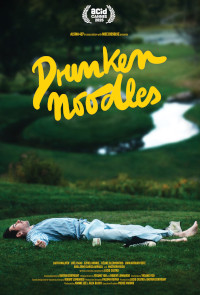
| 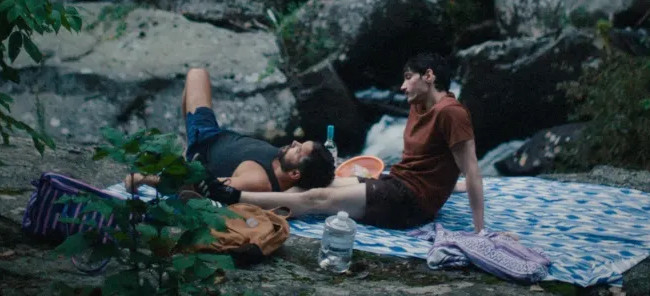 As in End of the Century (2019), Argentine writer-director Lucio Castro opens this story with a young man arriving in a city and getting friendly with the local boys. This is another astute exploration of how we connect with people on different levels, altering our life trajectory in the process. The story unfolds in chapters presented out of order, inventively creating a knowing wave of powerful emotion. In Brooklyn, art student Adnan (Khalifeh) is staying in his uncle's apartment and cruising in the park when he befriends food delivery guy Yariel (Isaac). Adnan works in a gallery showing erotic embroidery art by 70-year-old Sal (Kornel), whom he met a year earlier upstate when his bicycle got a flat tyre. They connect on physical and spiritual levels. Before this, Adnan visits a cabin with his boyfriend Iggie (Risch) for a weekend getaway as they try to mend the strain in their relationship. Their bond is tight, but they need to recapture a spark. Big ideas and visual flourishes fill the screen. Yariel invites three friends over to Adnan's, and their encounter is depicted in erotic tableaux. Sal's first meeting with Adnan plays out with ripples of lust and artistry, as well as a fantastical woodland vibe. As they make jokes together, Iggie insists that Adnan shouldn't take their problems so personally, even though they involve him. And their experience also takes a magical realist turn. Performances are earthy and understated, takinge advantage silent sequences to delve deeper. Khalifeh has natural charisma as the likeable Adnan, so it's easy to see why people are drawn to him. He brings out underlying feelings with unusual subtlety, and portays distinct connections these three men on a variety of physical, soulful and fraternal levels. Isaac, Kornel and Risch have the same loosely authentic approach, helping us understand how these men impact Adnan so profoundly. The title refers to a dish Adnan and Yariel share early on. They also share poems by Li Bai, which infuse the film with a philosophical exploration of the connection between desire and love. Conversations are a clever blend of light banter, revelatory emotions and engaging storytelling. So the film becomes a remarkable depiction of the growth we experience when we become vulnerable romantically. And even more powerful is the way it touches on how each of us has lingering issues that affect our relationships in ways that are difficult to articulate. This leaves the film both moving and eye-opening.
| 
See also: SHADOWS FILM FESTIVAL © 2026 by Rich Cline, Shadows
on the Wall
HOME | REVIEWS | NEWS | FESTIVAL | AWARDS
| Q&A | ABOUT | TALKBACK | | ||||||||||||||