| SHADOWS ON THE WALL | REVIEWS | NEWS | FESTIVAL | AWARDS | Q&A | ABOUT | TALKBACK | |||||
 Shadows off the beaten path Shadows off the beaten pathIndies, foreign, docs and shorts...
On this page:
AGATA THE WRITER |
ONE MINUTE TO MIDNIGHT |
TRICK
| |||||
| See also: SHADOWS FILM FESTIVAL | Last update 27.Sep.26 | |||||
|
Agata the Writer Review by Rich Cline | 
| |||||
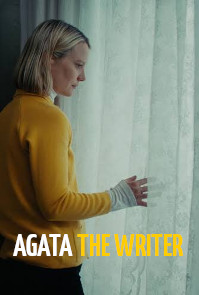 dir-scr Kuba Dorabialski prd Alex White with Mia Wasikowska, Vedrana Bozinovic, Mia Morrissey, Zoran Jevtic, Selma Alispahic, Admir Glamocak, Hatidza Coric, Teodora Matovic, Dino Sarija, Muhamed Glodo, Frances Falk, Kuba Dorabialski release WP Sep.26 vff 26/Bosnia 1h35  Now streaming... |
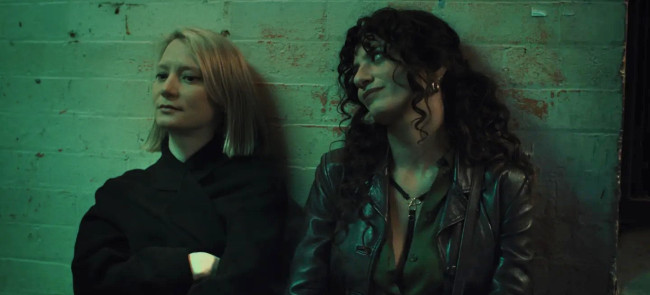 Defiantly resisting a standard movie narrative structure, Polish filmmaker Kuba Dorabialski wrote, directed, edited, photographed and composed the music for this ambitious meta-drama. The story is a fascinating exploration of the place where art and history converge, knowingly blurring lines between books, movies and journalism as an author confronts her motivations. While it's darkly intriguing, Dorabialski's approach is also indulgent and stylised, which leaves it feeling somewhat theoretical. Arriving in Sarajevo from Australia, novelist Agata (Wasikowska) is working on her next book, which she is setting during the 1990s Bosnian genocide. Her contact is theatre director Jasmina (Bozinovic), who is doubtful about this. And other locals she meets are equally reluctant to relive past trauma in a performative style for her. Because she was born in Poland, Agata feels a Slavic connection here, and she enjoys a visit from her childhood friend Davina (Morrissey). But someone is stealing profane art from the flat she's staying in, and this becomes increasingly difficult to ignore. Opening with a voiceover that sounds like the first paragraph of a novel, a man's gravelly voice describes Agata escaping the Australian summer while we watch a sound recordist (Dorabialski) capturing the ambient noise of nature in the Bosnian mountains. This kind of deadpan, self-referential style continues throughout the film, leading to an extended sequence at the end as Agata reads what she has written straight to camera in the language of a film script. Thankfully, Wasikowska adopts a strikingly naturalistic style, which makes Agata engagingly offbeat as she observes people and places, making surprising connections. The most complex role is Jasmina, and Bozinovic beautifully captures her instant reactions ("Write about your own mess!"), open-minded observations and internal struggle. And the witnesses played by Alispahic, Glamocak and Coric offer a riveting doc-style kick. Jasmina challenges Agata to write about peace rather than war, because real people's pain shouldn't be used as a device for fiction. And after all of this time, and all that has been written about the Balkans War, a novel surely won't change anything. While the film is beautifully shot and scored, the themes develop in ways that feel meandering and elliptical, only making vague points about the legacy of war. But what it says about the nature of writing is fascinating.
| ||||
|
One Minute to Midnight Un Peu Avant Minuit Review by Rich Cline | 
| |||||
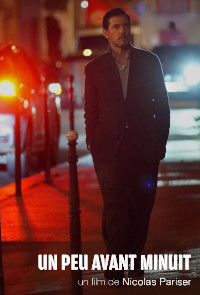 dir-scr Nicolas Pariser prd Emmanuel Agneray, Audrey Guatelli with Melvil Poupaud, Chiara Mastroianni, Golshifteh Farahani, Anais Demoustier, Leonie Simaga, Clara Pacini, Micha Lescot, Nicolas Chupin, Nicolas Pariser, Sam Chemoul, Lucie Gallo, Thibault Vincon release WP Sep.26 vff 26/France 1h48 Is it streaming? |
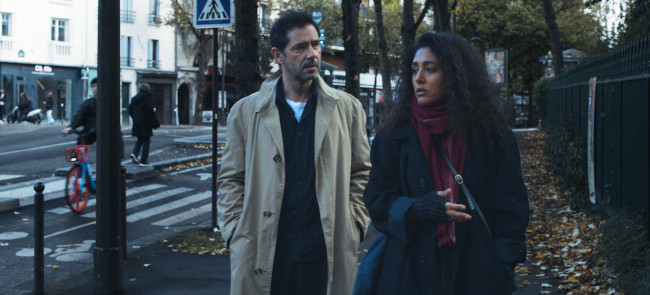 Talky and introspective, this French drama follows a 49-year-old man as he drifts from one intriguing conversation to another. All of this is very sharply pointed, and writer-director Nicolas Pariser keeps it engaging by honing in on tantalising ideas about the disparity between memory and reality and connections between men and women. But while it explores these kinds of hugely resonant issues, the film remains largely academic. On his way to Italy to settle his father's estate, Leo (Poupaud) has days to kill in Paris, so he visits his daughter Emma (Pacini). He also contacts his former cohorts who live here, and one friend's wife (Simaga) challenges him to apologise to the women he loved so badly. He starts with politician Armelle (Demoustier), who was an intern when he knew her. Then there's Tina (Farahani), the one that got away, whom he finds in an unexpected place. And arriving in Italy he meets Giulia (Mastroianni), the sister he never knew he had. Through all of this, armed police units fill streets in the background amid clashes with protesters, leading to a declaration of marshal law, which reminds Leo of his youthful idealism. Leo never met his late father and barely knows his daughter, and he speaks about how he never quite settled on a career. As he meets these old friends, each one provokes him. And Tina calls him on his need to have another exhausting existential conversation. Poupaud has an effortless charm that makes him easy to identify with, and the women he meets all see him as a good guy, even if there might have been dodgy circumstances surrounding their earlier connections. Even now, he falls back on sex a bit too easily. Each of the actors delivers a fairly low-key performance, which allows them to create a bright sense of personality and wilfulness, creating people who are focussed on their own lives rather than Leo's. He knows that not everything is about him, but it's also clear that he has never seen his life choices through other people's eyes. It's tricky for us to remain focussed on so many dense dialog scenes, one after another without a break. But each of Leo's discussions overflows with important points about how relations between men and women have shifted over the years as society evolves, for better or worse.
| ||||
|
Trick Scherzetto Review by Rich Cline |
| |||||
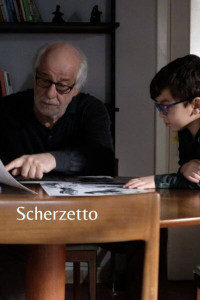 dir Mario Martone scr Mario Martone, Ippolita Di Majo prd Maria Carolina Terzi, Carlo Lorenza, Luciano Stella, Mauro Luchetti with Toni Servillo, Lorenzo Perrotta, Serena Rossi, Leonardo Lidi, Gianluca Di Gennaro, Giovanni Ludeno, Maria Gabriella Lanza, Patricia Pimienta, Diego Pleuteri, Luciana Zazzera release WP Sep.26 vff 26/Italy Rai 1h52 Now streaming... |
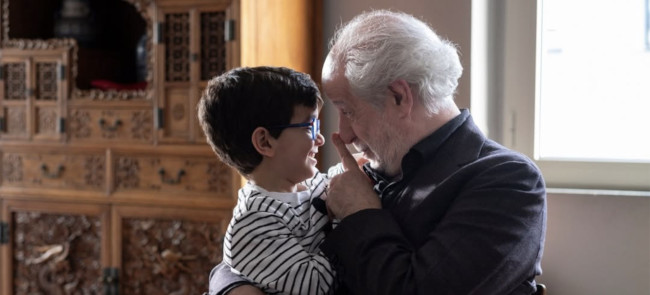 Centred around a man and his young grandson, this Italian film mixes comedy and drama in a way that's somewhat uneven. Filmmaker Mario Martone is gifted at creating complex characters and seeing the world through their eyes, so there are layers in this story that speak to issues of aging, nostalgia and the disparities between generations. And actor Toni Servillo is a master at engaging with the audience. Returning to the Naples flat where he grew up, Daniele (Servillo) is taking care of his cheeky 5-year-old grandson Mario (Perrotta) for three days while his parents (Rossi and Lidi) attend a conference. But Mario speaks like an adult, thinks he knows everything and doesn't understand why Grandpa needs to work, drawing illustrations for a new collection of Henry James stories. Daniele has fun playing with Mario, revisiting the streets from his childhood. But he struggles with this cute-but-mischievous child's stubborn will. Then one afternoon, an incident involving a balcony creates an unexpectedly serious problem. This crisis is carefully set up, so we see it coming. And it's accompanied by Daniele's visions of ghosts everywhere he looks in the apartment, including his grandmother and brothers living in the same room he is now sharing with Mario. There's also his late wife, who never understood his talent. This provides both warm melancholy and a whiff of horror, which keeps us wondering which way the story might go, especially when this odd couple finds itself in a precarious predicament. Servillo is so earthy and natural that his grumpiness never undermines his clear adoration of his grandson, played with astonishing bright energy by the scene-stealing Perrotta. They are terrific together, both when they're fighting and when they're teaming up to do something vaguely transgressive. And through all of this, Servillo is able to reflect Daniele's deeper journey into his own thoughts and memories, reluctantly confronting his past fears. While the film's first two thirds are essentially a comedy centred around the quirky relationship between these two sparky characters, the final third is an extended sequence that leaves us squirming at some bleak possibilities. It may be another trick, one of the good-natured pranks these two play on each other, but it pushes the film's darker themes about mortality with a bit too much intent. It also distracts from the more resonant layers of Daniele's odyssey to connect his past with his present.
| ||||

See also: SHADOWS FILM FESTIVAL © 2026 by Rich Cline, Shadows
on the Wall
HOME | REVIEWS | NEWS | FESTIVAL | AWARDS
| Q&A | ABOUT | TALKBACK | | ||||
