| SHADOWS ON THE WALL | REVIEWS | NEWS | FESTIVAL | AWARDS | Q&A | ABOUT | TALKBACK | |||||
|
The Basics of Philosophy
Review by Rich Cline |
| |||||
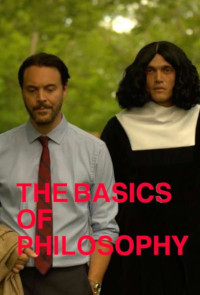 dir-scr Paul Schrader prd Braxton Pope, David M Wulf with Jack Huston, Sofia Boutella, Daniel Zovatto, Shiloh Fernandez, Bill Pullman, Dana Delany, Nolan Stewart, Karl Glusman, Elizabeth Petruso, Rufus Burns, Davis DeRock, Richard Gere release WP Sep.26 vff, US Oct.26 tdf 26/US 1h34 


 Is it streaming? |
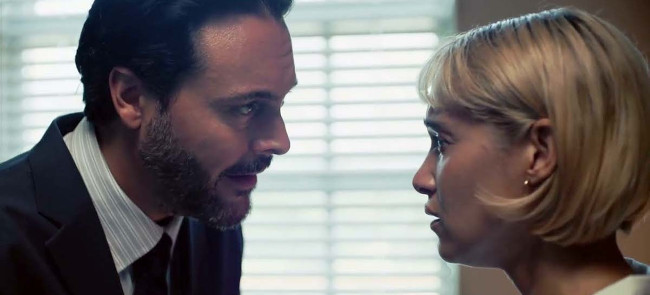 Unlike other filmmakers, writer-director Paul Schrader continues to explore issues of morality, religion and sexuality, unafraid to embrace complexities and downright messiness in thorny ideas and situations. Once again, this story touches on where these three meet, as a man grapples with whether he has control over his nature. The production design is oddly stark, and the music almost unnervingly light, but it definitely gets us thinking. Kansas City philosophy professor John (Huston) is in a close relationship with psychology professor Rebecca (Boutella), who has a 14-year-old son, Will (Stewart). When John's father Melvyn (Pulman) dies, he encounters Miguel (Zovatto), his former piano student. Decades earlier after a sexual incident between them, his father made it all go away. So now John's musings turn to issues of forgiveness and whether it's possible to truly change yourself. For him, the question is whether he's gay, or perhaps he can have a happy life with Rebecca. And his swirling thoughts begins to consume him. Because of the stripped-back filmmaking style, scenes have an awkwardness that's intriguing, largely because the dialog probes so far into the themes. There are of course no easy answers here, so John begins to go in circles, even contemplating suicide as the most honourable way out. Meanwhile, a whisper of a thriller subplot threatens to undo the film completely, as sneery queen Claude (Fernandez) sees the potential for blackmail. Even with the literate dialog, the performances have a grounded, emotionally resonant tone. They're also complex enough to avoid stereotypes. Huston makes us feel John's internal battle without ever tipping over into melodrama. The flashbacks and a fantasy moment when he meets his hero Spinoza (Glusman) add layers to the way he acts and reacts to the people in his life. Boutella has a sharp presence as the never-naive Rebecca. Zovatto avoids cliches as the hapless disruptor of the piece. And there are solid turns from Pullman (in flashbacks) and Delany (as John's stepmother). Yes, the script is very heady, throwing around philosophies and enormous topics. But as John's personal odyssey settles into his desire to understand whether he can actually change, and choose who he wants to be and what he wants to do with his life, these ideas take root. The truth is far more intricate than any system that's been developed to explain human thought and behaviour. So the film's final image is powerful, important and haunting.
R E A D E R R E V I E W S  Still waiting for your comments ... don't be shy.
|
||||
© 2026 by Rich Cline, Shadows on the Wall | |||||
| HOME | REVIEWS | NEWS | FESTIVAL | AWARDS | Q&A | ABOUT | TALKBACK | |||||

