| SHADOWS ON THE WALL | REVIEWS | NEWS | FESTIVAL | AWARDS | Q&A | ABOUT | TALKBACK | |||||||||||||||||||||||||||||
 Shadows off the beaten path Shadows off the beaten pathIndies, foreign, docs and shorts...
On this page:
BOORMAN AND THE DEVIL |
SHOOT THE PEOPLE |
SYNTHETIC SINCERITY
| |||||||||||||||||||||||||||||
| See also: SHADOWS FILM FESTIVAL | Last update 14.Jul.26 | |||||||||||||||||||||||||||||
|
Boorman and the Devil Review by Rich Cline | 
VENICE FILM FEST Now streaming...
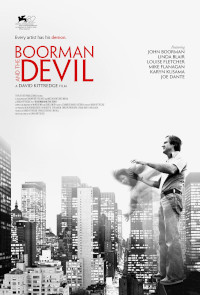
| 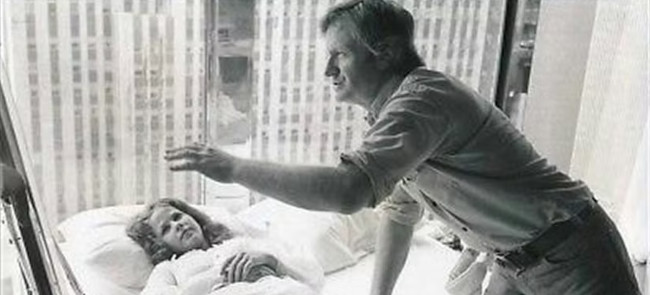 Because it works on several levels, this documentary finds remarkable resonance as it explores one of Hollywood's biggest box office bombs. While director David Kittredge traces The Exorcist's notorious 1977 sequel The Heretic, he also offers an involving profile of groundbreaking filmmaker John Boorman. And perhaps even more powerful is the exploration of a point in movie history when studios encouraged artists to take very big swings. After his artistic and popular success with Point Blank and Deliverance, Boorman was asked to make a sequel to box office champ The Exorcist. But he was uninterested in doing a rehash. Then he discovered that The Heretic was something different, a challenging story to tell. This also drew actress Linda Blair back to her iconic rols, plus recent Oscar winner Louise Fletcher and the legendary Richard Burton. The lavish production was eventful, busting both the budget and shooting schedule, but everyone thought they had something special here. Critics and audiences strongly begged to differ. Pointedly, the retitled Exorcist II The Heretic bears no resemblance to its predecessor, less a horror movie than a big-budget dive into spiritualism, so surreal that people found it laughably absurd. In a wonderful extended interview, Boorman discusses his frustration that audiences only wanted more of the same. But he also acknowledges how the project went off the rails. Blair and Fletcher are equally engaging as they infuse their comments with wit, knowingly nodding to the film's wackiness while also remembering how much fun they had making it. "I mean, I got to work with Richard Burton," Blair says. Kittredge also fills the screen with amusing animation (locusts are everywhere, naturally) and hilarious anecdotes that add colour to every stage of the film's production. He also traces Boorman's entire career, smiling at Sean Connery's Zardoz (1974) mankini while highlighting underrated masterpieces like Hope and Glory (1987) and The General (1998), as well as other filmmakers from his generation. It's fascinating to see The Heretic in this kind of context, especially its impact on Boorman's next film, the hit Arthurian epic Excalibur (1981). There's never an attempt to convince us that The Heretic needs to be reconsidered as a serious movie, but this documentary does champion its significance. And that maybe we shouldn't dismiss the pure intent and proper artistry that goes into making even the biggest flops in movie history.
|
| Misan Harriman: Shoot the People Review by Rich Cline |
|  dir Andy Mundy-Castle prd Wyn Baptiste with Misan Harriman, Martin Luther King III, Ilhan Omar, David Meyet-Gollan, Camilla Harriman, Sule Rimi, Nomarussia Bonase, Lesley Redmond, Mari Mansfield, Thabo Shabangu, Sissanda Aluta Mbolekwa, Kamau Franklin release US 19.Jun.26, UK 10.Jul.26 25/UK 1h35 Now streaming...
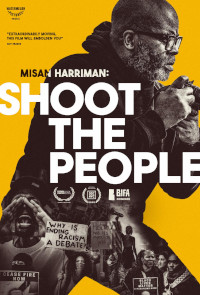
| 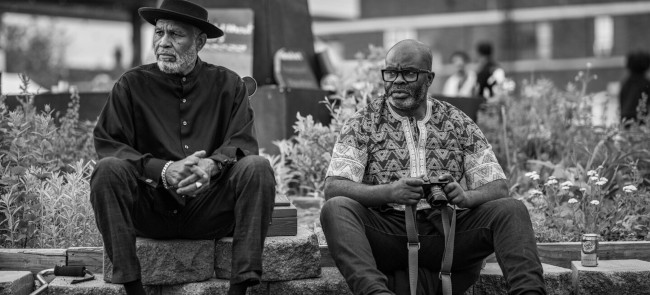 Exploring the state of today's divided world, this skilfully shot and edited documentary takes the perspective of Nigeria-born British photographer Misan Harriman. Because he narrates the film himself, it captures his heart, revealing how much he cares about the big issues of justice and equality that are driving the mass demonstrations he captures. And director Andy Mundy-Castle travels with Misan around the world to find the bigger picture. Passionate about documenting the human condition, Misan is a self-taught photographer whose work is seen around the world on social media. Inspired by the images captured by photojournalists throughout history, most notably Peter Magubane's coverage of the struggle to end apartheid, Misan's focus has been on situations in that bring deeper issues to the forefront, from institutional racism to political violence. So he is drawn to scenes in which the people hold their leaders to account. Even his portraits of celebrities have a pointed vibe. And the hate he receives online every day is shocking. It's fascinating to hear Misan speak about his life, and how he has always had to work hard to simply fit in. It took him awhile to work out who he was and what he was meant to do, recognising his own lived trauma in the Black Lives Matter protests, which in turn echoed the iconic coverage of America's 1960s civil rights protests and South African clashes in the 70s and 80s. And he sees strong connections with Free Palestine demonstrations. Misan estimates that 90 percent of his time is spent understanding the situation, before he starts snapping pictures. This allows his black-and-white images to speak loudly. It's no surprise that his photograph of a placard saying "Why is ending racism a debate?" is what made him known, referencing a statement by Martin Luther King Jr. He sometimes wonders whether he is making any difference, but he knows that he needs to bear witness, even if truth seems to be the needle in the haystack. Another often-photographed placard reads, "Silence is violence." As he puts it, you can't allow worry about the world to make you retrench. Clearly, documenting these activists is a way of preserving their important place in history. And this film beautifully captures his belief in the power of solidarity and empathy.
|
| Synthetic Sincerity Review by Rich Cline | 
| 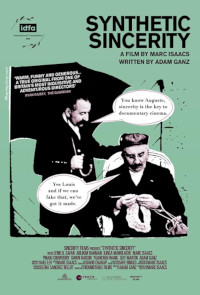 dir-prd Marc Isaacs scr Adam Ganz with Marc Isaacs, Lynn El-Safah, Ablikim Rahman, Ilinca Manolache, Pinaki Chowdury, Dawn Raison, Yuanchen Wang, Guy Martin, Adam Ganz, Kelly Downing release UK 17.Jul.26 25/UK 1h12 Now streaming...
|  Exploring the difference between real faces and those created with artificial intelligence, this hybrid documentary grapples with the nature of humanity. Filmmaker Marc Isaacs' witty, gently paced approach encourages us to watch out for the quirks make genuine people so engaging and surprising. The question is whether an AI character can ever reveal an inner world. And whether the power of a true documentary is fading away. Ingmar Bergman once noted that "film begins with the human face". Certainly, this has been Marc's experience as a documentarian. So he finds himself curious about how artificial faces are being created and rendered using AI technology. At a London university, researchers Lynn, Pinaki and Dawn are using Marc's previous films to teach computers to more accurately express human emotion. They also use cameras to scan Uyghur restauranteur Ablikim to capture his layered actions and reactions. Meanwhile, an AI assistant (Manolache) accompanies Marc on this journey, wishing that she had a human's depth of character. Blurring lines between fact and fiction, Marc is fascinated to see how a computer reads the thoughts and feelings of the people in his movies. Intriguingly, the researchers find more in silences than when they are speaking; it's especially useful to look at people who are trying to conceal their emotions. And they're riveted by a man who told various false stories to Marc. Meanwhile, Marc documents the lives of the lab researchers. Dawn prefers pinball to videogames, because she can physically feel them move. Lynn recalls being in Beirut as bombs fell on the city, and faces a disciplinary hearing because her Uyghur subject might offend the university's Chinese backers. Marc playfully assembles this material in ways that are both funny and pointed, and his methods are picked apart by this unapologetically unethical AI assistant. Through all of this, the blinding complexities of the human spirit come through in extraordinary ways. Perhaps this is because each of us is a combination of distinct hopes, fears and experiences, which is something a computer can never quite replicate. Cleverly, Marc also fills the screen with complex, nuanced images of people and places that AI could never dream of creating. The lingering question is whether a computer can do more than mimic the details of human expression and actually speak to the heart. This film encourages us to look closer.
| 
See also: SHADOWS FILM FESTIVAL © 2026 by Rich Cline, Shadows
on the Wall
HOME | REVIEWS | NEWS | FESTIVAL | AWARDS
| Q&A | ABOUT | TALKBACK | | ||||||||||||||||||