| SHADOWS ON THE WALL | REVIEWS | NEWS | FESTIVAL | AWARDS | Q&A | ABOUT | TALKBACK | |||||||||||||||||||||
 Shadows off the beaten path Shadows off the beaten pathIndies, foreign, docs and shorts...
On this page:
BACK TO BUENOS AIRES |
GURIA |
OUR SHARE OF SAND
| |||||||||||||||||||||
| See also: SHADOWS FILM FESTIVAL | Last update 20.Sep.26 | |||||||||||||||||||||
|
Back to Buenos Aires Ritorno a Buenos Aires Review by Rich Cline | 
| |||||||||||||||||||||
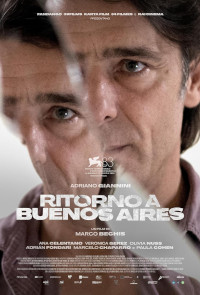 dir-scr Marco Bechis prd Domenico Procacci, Paura Paolucci, Alfredo Federico, Simona Banchi, Marco Bechis with Adriano Giannini, Ana Celentano, Veronica Gerez, Olivia Nuss, Adrian Fondari, Marcelo Chaparro, Paula Cohen, Vijaya Bechis Boll, Marcela Serli, Maria Laila Fernandez, Eduardo Hoy, Thales Wust release It 17.Sep.26 26/Italy Fandango 1h44  Is it streaming? |
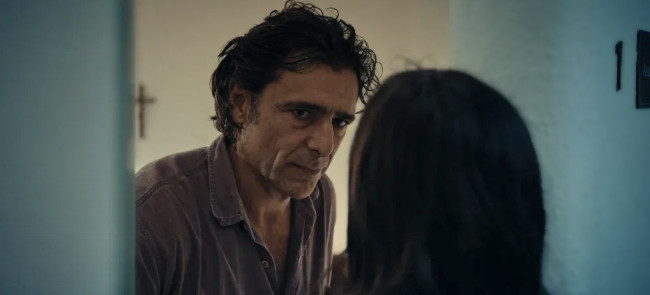 Exploring a historical event from a new angle, this powerful drama looks at the repercussions of severe trauma on an individual, a nation and the world at large. This is another film exploring Argentina's horrific late-1970s military regime, and writer-director Marco Bechis finely crafts a complex, challenging narrative that churns with underlying tension from the start. It also remains tightly introspective as it takes on seriously hideous truths. In 2010, Mariano (Giannini) is working as a paramedic in Italy when returns to Buenos Aires to testify about experiences 33 years earlier. He'd rather not revisit them, but knows he needs to put his story on the record. Meeting up with old friends stirs memories that blur with reality, because he's in the same places where he was once kidnapped, tortured and forced to work alongside the military leaders who are now on trial for atrocities. And things get more difficult when he spots his tormentor Doctor K (Fondari) walking freely through the streets. Remaining within Mariano's perspective, the film captures rippling effects of memories that have been ignored for decades. Everything triggers emotions: people, places, smells, offhanded comments. So simply recounting his experience to the judge (Cohen) becomes a seemingly insurmountable task. His lawyer (Chaparro) allows him to watch other witnesses. But he is on his own journey, continually escaping his minders for his own personal reasons. This results in heart-stopping sequences that cleverly weave flashbacks into the present. Giannini is nicely understated as a man who is trying to control his feelings, so it seems like emotions surge from a hidden place inside him. His interaction with the superb Celentano, as a former cohort, is complex and moving. Scenes with Gerez's Evelyn are also involving, as she searches for answers about her mother (Nuss), Mariano's former colleague. And the most chilling scenes involve encounters between Mariano and Fondari's chillingly unapologetic monster, who has managed to hide his identity all this time. Yes, this is a pointed reminder that, even after decades, a history of injustice will still have a major impact on society. This reality echoes through cultures around the world, so this story is a reminder that actions and motivations will always defy the usual simple explanations. Without wallowing in the trauma, this film quietly makes a bold statement about how many shapes pain can take. And these provocative ideas force us to see ourselves and others through a more honest perspective.
| ||||||||||||||||||||
|
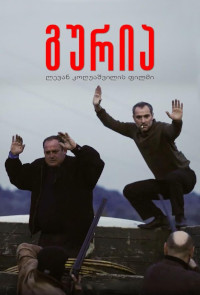
Guria Review by Rich Cline |
MUST  SEE SEE
Is it streaming?
| 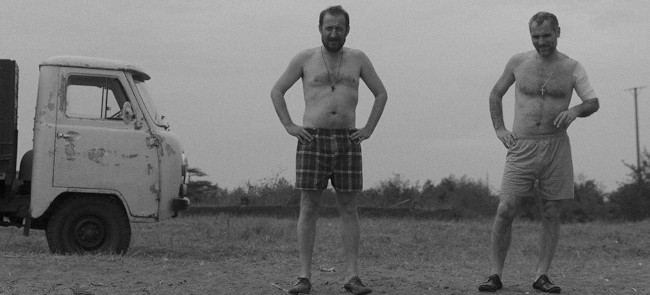 Shot in black-and-white, so it already looks like a cinematic classic, this wry comedy-drama from Georgia is set in 1992, following the breakup of the Soviet Union. During these years, the nation suffered through waves of political and military violence. With that in the distant background, director-cowriter Levan Koguashvili takes a slice-of-life approach in the rural Guria region, honing in on a lively community and a key friendship. In a village near the Black Sea in western Georgia, recently widowed Zuriko (Tcholadze) struggles to get a fair price for his harvest of hazelnuts, so his friend Gela (Jangidze) offers to drive him to another town to sell them. On the way, they're attacked by local thug Kakucha (Chkhartisvili), derailing their plan. Zuriko is injured, and as he recovers he finds a spark with choir director Maia (Nikolaishvili). Meanwhile, Zuriko's teen son Achi (Kviloria) finds himself in a romantic triangle when Eka (Kamladze), the girl he likes, is kidnapped by Kakucha's son Beso (Natsvaladze). Gliding along local rhythms, the plot points have a delightfully light touch, even if everyone here seems to have a short fuse, erupting in shouting matches and violent outbursts that feel humorous simply because they're so disproportionate. Hilarious sequences include grenade-throwing classes in high school and a beauty pageant that requires contestants to catch a cheeky goat as it runs through the village. And as Zuriko's former mother-in-law (Kalandadze) tries to find him a new bride, she's unimpressed by an educated woman who can't even pluck a chicken. All of this swirls around the engaging bond between Zuriko and Gela, played with deadpan charm by Tcholadze and Jangidze. In their mid-40s, they continually have each others' backs, whether facing off against armed robbers or flirting with some girls. And the women here are wonderfully feisty, taking none of their nonsense. They all know Zuriko is the most eligible catch in town, but they don't let him get away with anything. The teens are also played with nuance by bright young actors. Like the Wild West if there was rather a lot more rain, the muddy locations, creaky homes and rasping vehicles create a superbly lived-in earthiness, which is given a visceral spin by the monochrome imagery. This allows the filmmakers to be thankful things aren't like this any more, even as they have nostalgia for a time when life was both simpler and more dangerous, but also much more mutually supportive due to closely held traditions.
|
| Our Share of Sand Review by Rich Cline |
| 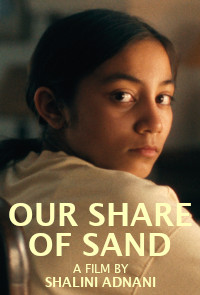 dir-scr Shalini Adnani prd Sara Bonakdar, Balthazar de Ganay, Michael Graf, Giorgos Karnavas, Alan McAlex with Maya Mehta, Mohammed Zeeshan Ayyub, Ellora Torchia, Jyoti Dogra, Krish More, Ravi Ranjan, Ashok Kangude, Atul Mahale release WP Sep.26 vff 26/India BFI 1h35 Is it streaming?
| 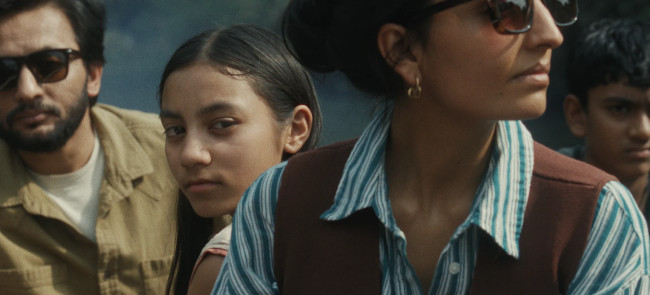 Warm and involving, this gentle drama from India has a churning undercurrent of tension that emerges throughout the narrative, even as the film remains a knowing coming-of-age story. Writer-director Shalini Adnani has a terrific eye for both characters and settings, capturing the rhythms of life in an intriguing corner of the world. And each of the characters emerges with a strong personality as they take their own journey. After growing up in Britain, observant 12-year-old Maya (Mehta) travels to India with her mother Priti (Torchia) to live with her father Rohan (Ayyub), who gathers sand from the riverbed to sell to a concrete factory. A team of local boys works for him, including Kiran (More), who befriends Maya. She also enjoys hanging out with her grandmother Arti (Dogra), learning about the family's history, including a rather enormous diamond Arti keeps in her safe. Then one night in the river, Kiran is injured, and Maya begins to wonder if her father is at fault. Relationships create beautiful textures throughout the narrative, as Maya continually revises her view of the situation around her. The connections with her parents are strikingly well-played, with a wary closeness that's riveting. In this strange new environment, Maya is discovering new things about her dad that shift how she interacts with her mum. Meanwhile, the film is carefully depicting the stark chasm between the bosses and workers. Visits to Kiran's home are particularly enlightening. Performances have a superbly authentic flavour, never indulging in any potential melodrama. So it's easy to put ourselves in the shoes of various characters along the way, through Maya's central point of view. Mehta has a lovely watchfulness that feeds into her curiosity, but she's also ready to take action to learn something new or to do what she thinks is the right thing. Both Torchia and Ayyub bring layers of complexity to their roles that continually add meaning to Maya's journey. And Dogra adds vivid moments of her own. This is a strikingly well-made film set in a distinct society we rarely see on-screen. So every scene is packed with fascinating details that we are discovering alongside Maya. From the working process around collecting sand from a river to the nuances of the lingering caste system, this is pointed picture of a specific culture that reminds us how many unspoken rules we have in our own parts of the world.
| 
See also: SHADOWS FILM FESTIVAL © 2026 by Rich Cline, Shadows
on the Wall
HOME | REVIEWS | NEWS | FESTIVAL | AWARDS
| Q&A | ABOUT | TALKBACK | | ||||||||||||||